Uncategorized
WATCH ARCHIVES ON DEMAND HERE…
WVSSAC 2015 State Baseball Tournament
Appalachian Power Park
Charleston, WV
Played June 4-6th
RSN SportsTV production sponsored by…
The Greenbrier Resort
Easy Links
Thursday, June 4th
4:30 pm AAA Semis, Nitro vs. Wheeling Park
7 pm AAA Semis, Greenbrier East vs. Jefferson
Friday, June 5th
10 am AA Semis, Chapmanville vs. Oak Glen
12:30pm AA Semis, Bridgeport vs. Pikeview
5pm A Semis, Wahama vs. Bishop Donahue
7:30pm A Semis, Man vs. Moorefield
Saturday, June 6th
State Baseball Tournament Central
On RSN Sports Network sponsored by…
Tim Mitchell is a sports psychology consultant and a former U.S. Navy deep sea diver. He has been coaching both youth and high school football for over 20 years and is currently an assistant coach at Fossil Ridge High School in Ft. Collins (CO). He has consulted with many football teams and athletes and can be reached at coachtimmitchell@gmail.com.
In this piece he discusses the importance of addressing the pressure players feel and how to harness that energy in a positive way. Mitchell originally shared this coaching tip in this article published in a recent issue of American Football Monthly. For subscription information for the magazine visit its website, AmericanFootballMonthly.com
****** The best quarterback on the team is a sophomore. He’s 6-foot-2 and built like a tree. His whole life has been filled with off season camps and QB gurus. He has all the physical attributes a coach could wish for. Everybody on the team has great expectations for this phenom.
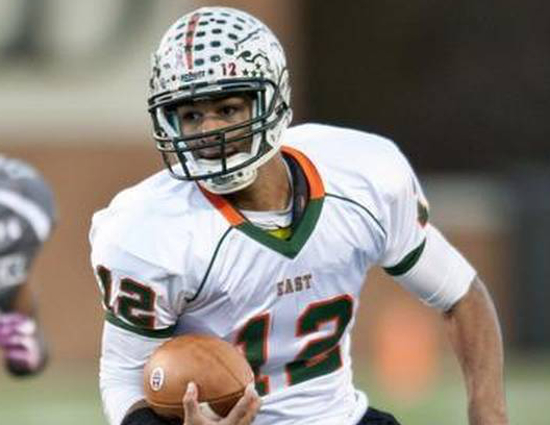
Anything less than a championship by the time he’s a junior or senior will be a great disappointment.
It’s game time, and he knows everyone’s watching. He can feel the pressure. His stomach doesn’t feel so good. He’s getting nervous. He feels like throwing up. His palms are sweaty. It’s Friday night and there is no retreat.
What can we do to help our players manage their nerves and prioritize their energy in the proper direction?
First, we need to understand the nervous system is something we can regulate with a few different mental tools. We don’t want to be too high or too low so we need to understand how to regulate the nervous system to meet the demands in any situation. In the case of the sophomore QB, we might need to employ some breathing exercises to bring him down or it may be as simple as recognizing how he deals with pressure to help him interpret that pressure properly. Every athlete reacts differently to various situations. Here are some mental fundamental tools that can help your football players control their oil pressure gauge.
Control the Controllables
The first step is to become aware of what we can control and what we can not control. We can control what we think, how we feel and what we do. Everything else is irrelevant because we can not control it. So we must focus all of our energy within our center of control. We feel nervous, so we change the way we think about it. We feel anxious, so we choose to breath and release. We redefine our direction toward an elite mentality.
The mentality is that we will harness everything we think, feel and do. I’ve mentioned before the exercise of drawing a circle on the white board. In that circle, athletes can write down the elements within their control. Outside the circle they write down what they can not control. As athletes get better at using mental skills, they should start to recognize that interpreting their emotions is something they can control. I’m going to identify some mental tools that directly regulate energy level.
Breathe Like a Baby
Our body breathes automatically throughout the day and while we are sleeping. A simple exercise to calm the sympathetic system down can be done though intentional diaphragmatic breathing combined with a directional thought (a thought inspired by gratitude). Remember we can control what we think, feel and do so this exercise is taking control of all those things.
Have your players put one hand on their chest and one hand on their belly. As they take deep breaths, ask them if they can feel their chest rise or their belly rise. If they feel their chest rise direct them to concentrate on making their belly rise. Diaphragmatic breathing is achieved when the belly rises. Babies naturally breath this way. As we get older or tense up, we tend to breath with our chest. Breathing from our chest can often be connected to muscle tension and stress. Changing the way we breath in hectic times can bring our nervous system back inline. When you connect deliberate breathing with proper thoughts you can control your heart rate. The combination of this deliberate breathing and thinking gives athletes the ability to regulate themselves for whatever the task may require. Do I need to calm down or do I need to amp up?
The Butterflies Fly in Formation
The manifestation of nerves is completely normal. It happens to every athlete in some way. Some get sweaty palms, some get the shivers and some have to throw up. The problem with these symptoms aren’t the symptoms at all. The problem is how we define them. Athletes who experience heavy pre-competition symptoms tend to translate them into a negative framework. (Society hasn’t helped much, associating physiological symptoms with cracking under pressure.) They start to think they’re not ready. In reality the opposite is true.
Those symptoms are the body’s way of telling the athlete “we are ready to perform”. The body is amping up for high performance, not cracking under the pressure. The first step to helping your football players with crazy pre-performance symptoms is to identify the symptoms and then redefine why they happen. I always tell them, “It’s because you care. This performance is very important to you and that’s why you’re nervous. You want to do well and your body is reacting to that desire.”
Example: I get severe butterflies that make my whole body shiver like its cold.
Embrace: I embrace these symptoms and know why they are happening.
Definition: This is how I know I’m ready for maximum performance.
Action: Now I’m going to give my best effort as I sync my mind and body.
There is no guarantee the same symptoms will be present every time. Just remember to embrace and define why they’re happening. This is a practice all of your players should incorporate into their pre-game ritual. Yes, sometimes athletes can have powerful symptoms that feel uncontrollable. Help them take control through deliberate and rhythmic breathing combined with directional thoughts.
Take three deep diaphragmatic breaths. Upon exhale, focus on your center and feel gratitude for this moment. Repeat as needed.
Sleep
This one may sound too simple. When it comes to regulating energy, studies show that sleep deficits have a brutal effect on the body’s ability to perform. The main take away here is to consider sleep just as important as diet and hydration. Your players need to sleep 7-8 hours minimum. There is no substitute.
We don’t claim to have a magic wand in sport psychology. Some tools I mentioned seem like common since because they are. It’s up to you to make them important. How important is the mental game? How much of the game is mental? How do you coach that part of the game? It’s subtle but crucial.
JOIN THE HSFB100 DISCUSSION: Create a user name | Post on The Varsity Board
Bob Mullett, game director of the 2015 WCHS-TV 8/FOX-11 North-South Football Classic, has announced the player list for this summer’s event.
Mike Young, head coach of Wheeling Central Catholic, will lead the North Bears. Cabell Midland head coach Luke Salmons will direct the South Cardinals.
The 2015 North-South Football Classic will kickoff at 7 PM on Saturday, June 20, at Laidley Field in Charleston.
2015 NORTH BEARS
Name High School
Dylan Anderson Morgantown
Alex Banko Robert C Byrd
Theo Blackston Wheeling Park
Iden Blizzard Keyser
Zach Bombardiere Bridgeport
Trevor Boot Parkersburg South
Eric Brown Martinsburg
Steven Brown Hedgesville
Shea Campbell Morgantown
Max Chefren Parkersburg
Joe Clark Berkeley Springs
Bub Dewitt Preston
Benny Duplaga Wheeling Central
Deonte Glover Musselman
Henry Gompers Wheeling Park
Tommy Hall Parkersburg South
Joe Harold Fairmont Senior
Ross Harvey Lewis
Chase Heck Martinsburg
Zahir Hicks Weir
Myles Johnson East Fairmont
Mo Kelly Elkins
William Larch Weir
Dane Mills Parkersburg South
Conner Nelson Bridgeport
Justin Noble Robert C Byrd
Bernard Northrup St. Mary’s
Elliott O’Brien Wheeling Park
Cord Ozalas Grafton
Jeremy Pratt St. Mary’s
Michael Ramsey University
Will Ransom Jefferson
Caleb Riggleman Elkins
Cody Rine Brooke
Matt Vucelik Bishop Donahue
Dakota Watson Williamstown
Mitchell Winkie Bridgeport
Head Coach: Mike Young (Wheeling Central)
Assistant Coaches: Jamie Bordas (Wheeling Central), Scott Holt (Cameron),
Jason Rine (Wheeling Central)
Athletic Trainer: Steve Lough (Ripley)
2015 SOUTH CARDINALS
Name High School
Johnathon Burkes Capital
Chad Burns Pocahontas
Alex Childers Cabell Midland
Ryan Church Meadow Bridge
Justin Cogar Westside
Corey Coppola Bluefield
Tryston Crone Scott
Issac Crow Ravenswood
Brady Elkins Cabell Midland
Clay Ellis Mingo Central
Grant Ferguson Wayne
Josh Fraley Huntington
Marquis Frazier Greenbrier West
Brandon Ford Hurricane
Jacob Gordon South Charleston
Kashaun Haley Capital
Noah Hancock Woodrow Wilson
Mason Hodge Wayne
Zach Holt Mingo Central
Rhys Jelich Ravenswood
Jordan Kinney Capital
Troy Lilly Woodrow Wilson
Trenton Mahan Herbert Hoover
Jake Martin Ripley
Brandon Morrison Huntington
Neil Mullins Man
Jon Peterson Point Pleasant
Zach Postin Cabell Midland
Terron Robinson South Charleston
Corey Romans Huntington
Demetrius Serciez Wahama
Tyler Shaffer Sissonville
DJ Stewart Bluefield
Jordan Tucker Buffalo
Nik Walker Wyoming East
Ty Walker Greenbrier East
Aden Yates Point Pleasant
Head Coach: Luke Salmons (Cabell Midland)
Assistant Coaches: Core Cole (Cabell Midland), Donnie Mays (South Charleston),
Terry Smith (Cabell Midland)
Athletic Trainer: Heather Adams-Smalls (South Charleston)
Lincoln County High to Host National Invitational
Panthers set to conduct NAYS Tournament in Hamlin May 8-10.
The tournament is now open to West Virginia, Kentucky and Ohio teams in particular but NAYS touts on its website that it’s involved with teams in over 40 states.
Registration for the Lincoln County, WV tournament can be found on the organization’s website at www.NorthAmericanYouthSports.org
The group’s vice-president, Mark Garrigan, describes the experience and background of NAYS on the website…
WELCOME TO NORTH AMERICAN YOUTH SPORTS!
We would like to take a few moments to personally welcome you to the North American Youth Sports basketball program. We are entering our 25th season, and have grown from an infant organization with just one grade school team to an organization that now encompasses teams from nearly 40 states, and has had players involved from several foreign countries. We will have over 100 basketball events in over 80 different cities each year. Our goals are to provide quality, affordable youth basketball tournaments for the youth of North America. We feel that as you proceed through this site, you will see why we are the fastest growing youth basketball program on the continent. Lower costs, more games, and more advantages for you…the STUDENT-ATHLETE. May your experiences in NAYS be memorable regardless of the results on the scoreboard. We look forward to seeing you at one or more of our many events!
Sincerely,
Mark Garrigan
Vice-President/CFO/COO
North American Youth Sports
Nays credits much of it’s growth to a focus on student athletes and opportunities for lower cost participation than other national organizations. Spring tournaments can be accessed for as little as $95 per team.
Jim Place has been an educator for 46 years and is a member of the Ohio High Football Coaches Hall of Fame. Currently he teaches nine different character education classes at the University of Dayton. You can visit him at JimPlaceServices.com.
In this piece he discusses the importance of character on a football team. Placer originally shared this coaching tip in this article published in a recent issue of American Football Monthly. For subscription information for the magazine visit its website, AmericanFootballMonthly.com
Each year you have 10 scheduled games and most every team will set their goal at going 10-0.
The reality is that very few teams have the physical talent to reach this goal.
The reality is that each team has a four-game swing based upon their talent.
For a given team based upon their talent the best record may be 7-3 and their worst 4-6, other teams 2-8 to 5-5 or 9-1 to 6-4.
This is the range of records that is realistic for your team to win based upon a realistic appraisal of your talent. This is a huge swing. How do you maximize this opportunity? There are a number of factors but one factor far outweighs all others together and that is “character”. Teams who have great character will year in and year out reach the top level of wins. Teams with low character will continually reach the lower level of this four game swing.
If you did a post season evaluation of your team each year, how many of your major problems are character related; that is, player suspensions, players missing practice, selfishness, lack of leadership and so many more.
Why not do something about it?
How do you increase character in your program? Here are some suggestions:
1. Have a plan. Character is talked about by everyone, but being truly committed is another story. For most, this is not a conscious thing but there is just not enough time for everything and when a push comes to a shove, the character plan is often left out. To help prevent this, your plan has to be written and given to everyone in the program. You have to publicize it and get everyone on board. For my teams, we used character cards. They are the basis for everything we do in our program.
The players carry the character cards in their wallets 7/24. During the season, the players fill out a new character card listing their weekly goals. The core of the character cards are the 10 keys to a good attitude and the 10 keys why you are a ‘Tiger’.
2. The only mistake you can make in this area is to do nothing. It does not have to be a large grand plan but what you implement, commit too.
3. Poor character is a society problem. Just try to look for small victories. The small things that you do to effect young people may not pay immediate dividends but you never know what effect it may have on this young person later in their life.
4. Character starts with the head coach and staff – you have to mirror good character. This can be reflected in something as small as the coaches being on time for everything to how you deal with a major character crisis. How can we demand it of our players if we do not do it ourselves? If we want to be treated as professionals, we have to dress, speak and act with character.
5. Every character system relies on one-on-one relationships. Do we get so caught up in all our other duties that we neglect to set aside time to find out what is the most important thing in our program – the personal relationship with our players. In using the character card system, it guarantees that I will have one-on-one contact with every one of my players at least once a week
6. Examine the culture of your program. What needs changing? How do you change it? What are the attitudes that you may have inherited but are not good for the program? Habits are hard to change but this will never happen unless you make a plan for change.
7. You have to incorporate character it into your daily routine. If you do not talk about character every day, then it often is left out when a time crunch hits. It has to be part of your daily schedule just like offense or defense. I always had a character comment at the end of every practice or workout.
8. Look at the program through the eyes of your players. Do they see a caring environment where they can perform their best because they are accepted and respected by their coaches and teammates?
9. If you could project yourself 15 years into the future and look back at your program, what changes would you make? My guess is that most of them would be in the area of focusing more on using football to develop the players as young men.
JOIN THE HSFB100 DISCUSSION: Create a user name | Post on The Varsity Board
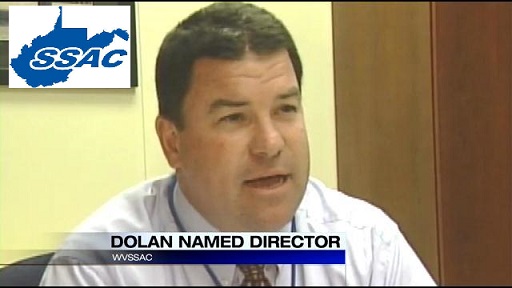
Dolan Chosen to Replace Ray at WVSSAC
Bernie Dolan, Assistant Superintendent of Schools for Ohio County, has been selected by the WVSSAC Board of Directors to succeed Gary Ray who will retire in January 2016. The Board of Directors interviewed five (5) candidates at the annual Board of Control meeting held at Stonewall Lodge and voted unanimously to hire Dolan.
Board of Directors President, David Cottrell said, “We had five (5) outstanding candidates but Mr. Dolan brings experience to the SSAC that is unmatched. His educational background touches all levels of the school system serving as a teacher, coach, athletic director, both as an assistant principal and principal and assistant superintendent. He has worked tirelessly when directing both the golf state tournament the Super Six football championships.”
While principal at Wheeling Park High School, Mr. Dolan served on the Board of Directors and coordinated numerous regional and sectional tournaments in a variety of sports. Dolan served Ohio County Schools as a Technology Coordinator while at Wheeling Park High School.
Gary Ray, outgoing Executive Director, said, “I have the utmost respect for Bernie Dolan and I am proud to pass the torch to him. He will continue to provide the necessary leadership well into the future for our education based interscholastic athletic programs. He will make the transition very smooth.”
Mr. Dolan is married to his wife Jeannette of 29 years and together they have two sons Joseph and Nathan and one daughter Claire. Joseph is married to Amanda while Claire is engaged to Dave Paxton. Dolan said, “I look forward with great anticipation to this opportunity to devote full time to education based athletics”.
Dolan will begin his employment on July 1, 2015.
Mon April 13, 2015
By Greg Williams
West Virginia Director of Scouting
The Elite Eight team rankings will be updated on a bi-weekly basis culminating with a final set of rankings following the state championships in June. Here are the scheduled dates that updates are to be released.
Update 2: April 27
Update 3: May 11
Update 4: May 25
Final Rankings: June 8
Week of 4/13/15
Class AAA
NEW YORK — To toughen safety standards in youth sports, medical experts are turning away from lawmakers and toward high school sports associations to implement policies and procedures to prevent deaths and serious injuries.
The National Athletic Trainers’ Association and the American Medical Society for Sports Medicine completed two days of meetings and programs with representatives from all 50 state high school athletic associations Friday at the NFL offices in Manhattan. The goal was to have decision-makers return to their states and push high schools to put into place recommendations on how best to handle potentially catastrophic medical conditions such as heat stroke, sudden cardiac arrest and head and neck injuries.
Some states, such as Arkansas, have passed laws requiring schools to meet certain standards, but Doug Casa, director of athletic training education at the University of Connecticut, said high school associations should be first to act because they have more flexibility to move quickly.
“Trying to get a state law passed, one, can take a long time but two, sometimes a lot of things get attached to the laws that weren’t the original intention. Also, they’re written by people who don’t truly understand the nuances of a football practice or how sports work into the system of a school year. Those are nuances that the state high school association totally gets,” Casa said.
In 2013, best practice recommendations were published in the Journal of Athletic Training, but many states are still lagging in implementation of those guidelines. They include having a full-time athletic trainer on staff, having automated external defibrillators in every school and accessible to all staff members, and having an emergency action plan for managing serious and potentially life threatening injuries. Funding is often cited as the reason schools, many of which are already struggling to make ends, meet fail to implement these recommendations.
According to the NATA and AMSSM, only 37 percent of high schools in the United States have full-time athletic trainers. Only 22 percent of states meet the recommendation that every school or organization that sponsors athletics develop an emergency action plan. Only 50 percent of states have met recommendations that all athletic trainers, coaches, administrators, school nurses and other staffers have access to an automated external defibrillator.
Casa said just 14 states meet the minimum best practices with regard to heat acclimatization, but the ones that have adopted them since 2011 have had no athlete deaths from heat stroke.
Casa cited Georgia, Arkansas, Texas, North Carolina and New Jersey as states that have been leaders in implementing the recommendations.
Jason Cates, a member of the executive committee of the Arkansas Athletic Trainers’ Association who led reforms in Arkansas after a high school basketball player died of sudden cardiac arrest in 2008, said that while legislation can be help to move programs forward, it can also create problems with legal liability.
“At what point in time are we going to legislate ourselves out of sports?” he said. “I think in some states, in some instances (legislation) is the way to go, but my hope is people just get it.
Casa acknowledged legislation is often necessary to fund programs.
With legislation comes politics and give and take. Kevin Guskiewicz, professor and co-director of the Matthew Gfeller Sport-Related Traumatic Brain Injury Research Center at the University of North Carolina, said that doesn’t come easy for medical professionals.
“It’s hard for people like us that are medical people to compromise on anything because we think we should have it all,” he said. “So that’s where we’re beating our fists on the table at state capital buildings as we’re debating why we need it all. I did learn a lot about compromise.”
Preseason Class A Elite Eight Rankings Released
Thu March 26, 2015
By Greg Williams
West Virginia Director of Scouting
As we prepare for a trip to Myrtle Beach, SC to jump start the 2015 season with a week’s action at the Mingo Bay Classic, we devote this week to our preseason Elite 8 rankings in each classification. Over the next three days we will reveal our top eight teams in each class. Today we take a look at Class A.
preseason class a elite 8
| Rank | School | Notes |
| 1 | Notre Dame | The Irish have made back-to-back trips to Charleston, losing to Man in last year’s title game. Although a significant portion of the Irish starting lineup graduated, leaving questions at a number of positions, look for them to continue to make noise in Class A. |
| 2 | Man | The Hillbillies look to defend their 2015 state title and return enough talent to make a return trip to Charleston a possibility. |
| 3 | Moorefield | The Yellowjackets come off a 21-9 campaign in 2014 and are the odds on favorite to push Notre Dame for the Region 2 berth in this year’s state tournament. |
| 4 | Clay-Battelle | Region 1 Preseason Player of the Year and two-time Class A all-state selection Kurt Latocha looks to lead the Cee Bees to Charleston. |
| 5 | Charleston Catholic |
Connor Golden (Marietta College) has departed, but much of the young roster that finished 21-11 in 2014 returns. |
| 6 | Parkersburg Catholic |
The Crusaders return more than enough offense to compete for a spot in Charleston. Pitching depth could be the issue in their march to the state tournament. |
| 7 | Greenbrier West | The Cavaliers were hit hard by graduation but will still trot out six seniors that should make significant contributions. A ramped up schedule heavy with games against bigger schools always makes them dangerous come playoff time. |
| 8 | Bishop Donahue |
C Alex Riedel, RHP Jesse Padlow (5-2) and IF/OF Brett Moore (.365) provide the Bishops with strong senior leadership coming off a 14-12 campaign in 2014. |
Elite 8 Preview Schedule
March 26: Class A Preseason Elite 8
March 27: Class AA Preseason Elite 8
March 28: Class AAA Preseason Elite 8
More West Viringia prep baseball news and expert analysis at http://www.prepbaseballreport.com/west-virginia